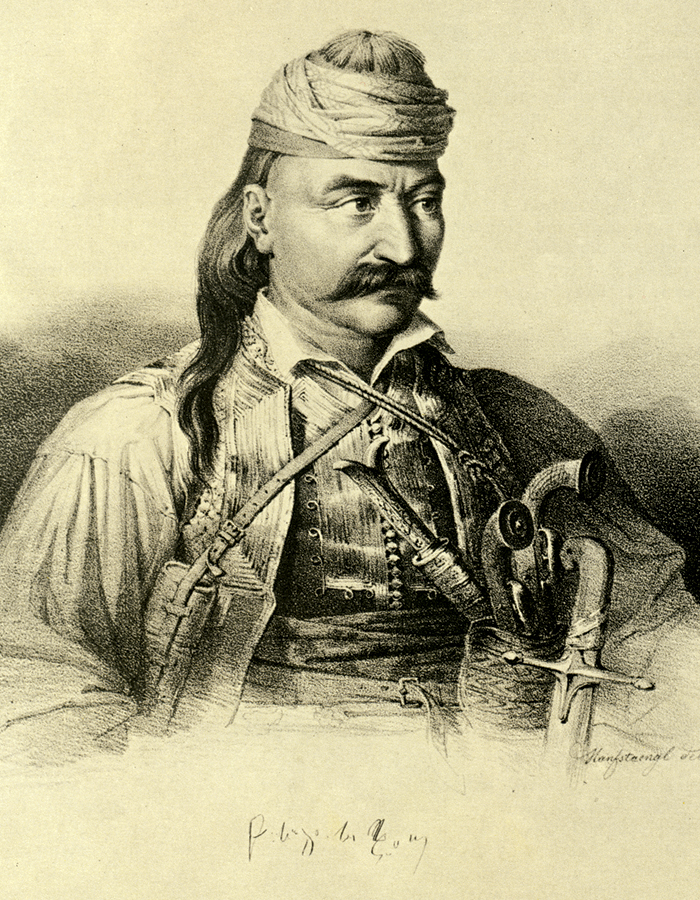
Και για τους Βρετανούς και το ''σοκ'' που έπαθε ο καλός φιλέλληνας. Ιδού τι συνέβη το 1812 στην Ισπανία, μετά την πτώση της Μπανταχόθ στα στρατεύματα του Ουελιγκτον:
With success came mass looting and disorder as the redcoats turned to drink and reprisals. The wanton sacking of Badajoz has been noted by many historians as a particularly atrocious conduct committed by the British Army: many homes were broken into, property vandalized or stolen, Spanish civilians of all ages and backgrounds raped, and many officers shot by the men they were trying to bring to order.Captain Robert Blakeney wrote:
The infuriated soldiery resembled rather a pack of hell hounds vomited up from infernal regions for the extirpation of mankind than what they were but twelve short hours previously – a well-organised, brave, disciplined and obedient British Army, and burning only with impatience for what is called glory.
Και το 1813 μετά την πτώση του Σαν Σεμπαστιάν:
On entering the town, the victorious British and Portuguese troops quickly discovered plentiful supplies of brandy and wine in the shops and houses, with many soon becoming part of a "reeling, riotous mob". Drunken and enraged at the heavy losses they had suffered, the troops ran amok, pillaging and burning the city and killing an unknown number of inhabitants according to some sources, but they may amount to 1,000. Some British officers tried to stop the looting but were either ignored or threatened by the drunken soldiers, or turned a blind eye or added to the plight. Statements (75 reports) were gathered bearing witness to the events starting on 31 August. One of the survivors and witness Gabriel Serres claimed that, "[the assailants] committed the biggest atrocities, such as killing and injuring many inhabitants and also raping most of the women". The burning started that very night on some houses, according to local witnesses. Local Domingo de Echave gave evidence echoing an English soldier's words pointing to flames coming out of a house: "See that house ablaze? Mind you, tomorrow all like this."The city kept burning yet for seven days, by which time only a handful of buildings survived. The rest of it burned to the ground—600 houses, city hall and record office included
After the burning, the town council and many survivors of the destruction held a meeting in Zubieta, where the devastated town dwellers decided the reconstruction of the town almost from scratch. Since the previous council had collaborated with the French, a new council was appointed, and a letter was written congratulating Wellington on his victory[7]:98 and requesting him that they'd be granted 2,000 starvation wages for those most in need. The demand was not met since Wellington refused to do so, and wholeheartedly wished in the reply that he not be addressed again. He went on to attribute the pillage to the French, and on 2 November while he was in Lesaka the British general denied any responsibility of the British troops on the burning. In November a popular trial was arranged by the town council "on the atrocious behaviour shown by the British and Portuguese troops", where tellingly only 2 women answered the questionnaire provided.
The tragedy is remembered every year on August 31 with an extensive candlelit ceremony.
Υπόψη ότι αυτά τα έκαναν σε βάρος ομόθρησκων, τους οποίους υποτίθεται πως πολεμούσαν για να απελευθερώσουν από τη γαλλική κατοχή.

Χμμμ, ναι, πρέπει να σοκαρίστηκαν πάρα πολύ από τα γεγονότα στην Τριπολιτσά.