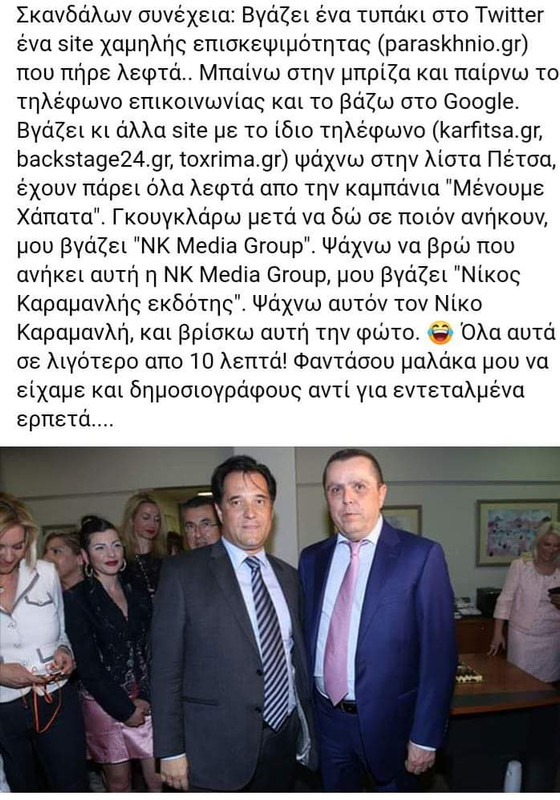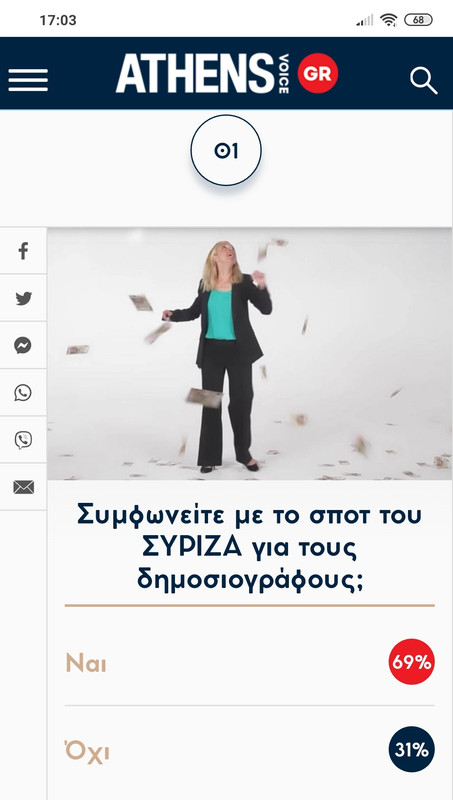
Την δική τους νοημοσύνη υποτιμούν όποιοι τα γράφουν αυτά, όχι την δική μας.Τζιτζιμιτζιχότζιρας έγραψε: 21 Ιουν 2020, 13:52Εντάξει, γελάει ο κόσμος.Planis έγραψε: 21 Ιουν 2020, 13:08 Εν πάση περιπτώσει, ο ΣΥ.ΡΙΖ.Α. είναι το τελευταίο κόμμα το οποίο δικαιούται να έχει παράπονα από τη δημοσιογραφία στην Ελλάδα.
Στο μεταξύ, επ' ευκαιρία της (μη) δημοσιοποίησης της λίστας Πέτσα, αντιγράφω από την κατάταξη του RSF, για την Βουλγαρία:
Πάλι θα πατώσουμε στους σχετικούς δείκτες, όπως επί μονόφθαλμου πιτσαγιόλου.Black sheep of the European Union
Despite increasing international pressure, media freedom in Bulgaria has not improved in 2019. The management at Bulgarian National Radio (BNR) tried to suspend the prominent journalist Silvia Velikova on september 2019. In 2019, Bulgaria’s two most popular media groups - NOVA Broadcasting Group and BTV Media Group changed ownership. Soon after the deal for Nova investigative reporters, Miroluba Benatova and Genka Shikerova were forced to leave. Editorial policy of the Bulgarian National Television changed from rather neutral to pro-governmental after the appointment of new director general. Corruption and collusion between media, politicians and oligarchs is widespread in Bulgaria. The most notorious embodiment of this aberrant state of affairs is Delyan Peevski, who ostensibly owns two newspapers (Telegraph and Monitor) but also controls a TV channel (Kanal 3), news websites and a large portion of print media distribution.The government continues to allocate EU and public funding to media outlets with a complete lack of transparency, with the effect of encouraging recipients to go easy on the government in their reporting, or to refrain from covering certain problematic stories altogether. At the same time judicial harassment of independent media, such as the Economedia group and Bivol continued to increase.