Serfdom (Pol. pańszczyzna) is a development of a specific feudal relationship between the landowner and the tenant, in the Western feudal system usually referred to as socage. In its most typical realization, a farmer held a piece of his lord's land in exchange for some kind of obligation. In the Medieval West, this most usually took form of supplying the lord with produce but could also have meant a straightforward payment of cash, called rent. Starting in the 15th century, this kind of relation gradually and consistently disappeared from the West, so as to become a complete relic by the 18th century.
At around the same time Eastern and Central Europe witnessed the exact opposite trend: the obligations of serfdom took on harsher and harsher forms. A peasant in the Polish-Lithuanian Commonwealth was obliged to work on his lord's land for a fixed number of days (this was at first considered as payment for using the land) – and these quota kept growing in early modern Poland, leading to a situation where the amount could reach more than seven days a week (sic!). This means that in order to fulfil his obligations toward the lord (pan), a peasant would have to work the land with his family. This itself turned peasants into quasi-slaves labouring on the land of the landowners. But the growing pańszczyzna was only one aspect of the escalating oppression of peasantry.
Even earlier, the nobility used its political impact to attach peasants to their land making them, technically speaking, glebae adscripti – this step subsequently confirmed through a series of Sejm constitutions, effectively prohibiting peasants from leaving the land of their lord and from changing their dwelling.
During this period the landowner's legal control over peasants also grew: sanctions were introduced culminating in capital punishment. The license and impunity of landowners and their administrators vis-a-vis their peasants was boundless. As French historian Daniel Beauvois cogently showed, landowners in 19th century Ukraine were extremely cruel and their cruelty was never appropriately punished: beating a peasant to death entailed a “punishment” of “a month of arrest and performing a penance suggested by a priest”.
But szlachta had also more sophisticated modes of subjugating peasants apart from cruelty. One of such inventions was propination – a privilege granted to szlachta, which gave the landowners monopoly over profits from alcohol drank by peasants they owned. Peasants had to buy at least a given quota of vodka from the landowner, which means they were spending their money in the business of the landowner. Propination became one of the main causes of alcoholism among Polish peasants.
The landowner was also the one to decide whether a peasant could leave the village and even the future of his children – whether his sons could be educated in the town and become craftsmen or whether they would stay in the village working the land. The landowner also decided the fate of widows, who were often made to marry a peasant selected by the master in order to fill in gaps in workforce.
The Polish Django
As a result much of the peasant population of the Polish Lithuanian Commonwealth lived in a social situation that was not unlike that of the slaves in America – and, as Jan Sowa suggets, could be reminiscent of scenes from American films about the South.
“Had we stripped Quentin Tarantino's Django of a layer of exaggerated violence, so typical of this director, we would arrive at a pretty faithful picture of the countryside in the Polish Commonwealth.”
Like the black slaves in the plantations of the South, peasants in Poland were tied to the land, had to work hard (and for free), they could be severely punished by nobles living in white manors, and if they escaped, they were hunted. Just like their American counterparts, they lived a life that was hopeless and without much hope for change.
According to Jan Sowa the only difference between serfdom in Eastern and Central Europe and slavery as we know it from the Americas was that people were not sold individually, which means that members of families were not separated from each other. This does not mean however that there was no human trafficking. There was but it was a wholesale trade – villages were sold en bloc with all their population.
But how and why did this Polish serfdom originate? And what was its role in the economic system of the Commonwealth? As Jan Sowa explains, the early development and expansion of serfdom in Poland was rooted in the much different economic organization of the East and West Europe whose different ways of evolution have become apparent by the 16th century:
“West of the Elbe river feudalism becomes obsolete and is replaced by different forms of (proto)capitalist order – this is accompanied by the diminishing role of agriculture, and the rising significance of trade and production. Poor masses migrate from the countryside to the cities, supplying a reserve army of workers, which will soon feed the proletariat.
The situation takes a completely different turn in the East where “these masses remain stuck in the country, the economy is dominated by agriculture, and all set on export, while the towns rather than improving their role, are becoming weaker”, Sowa explains.
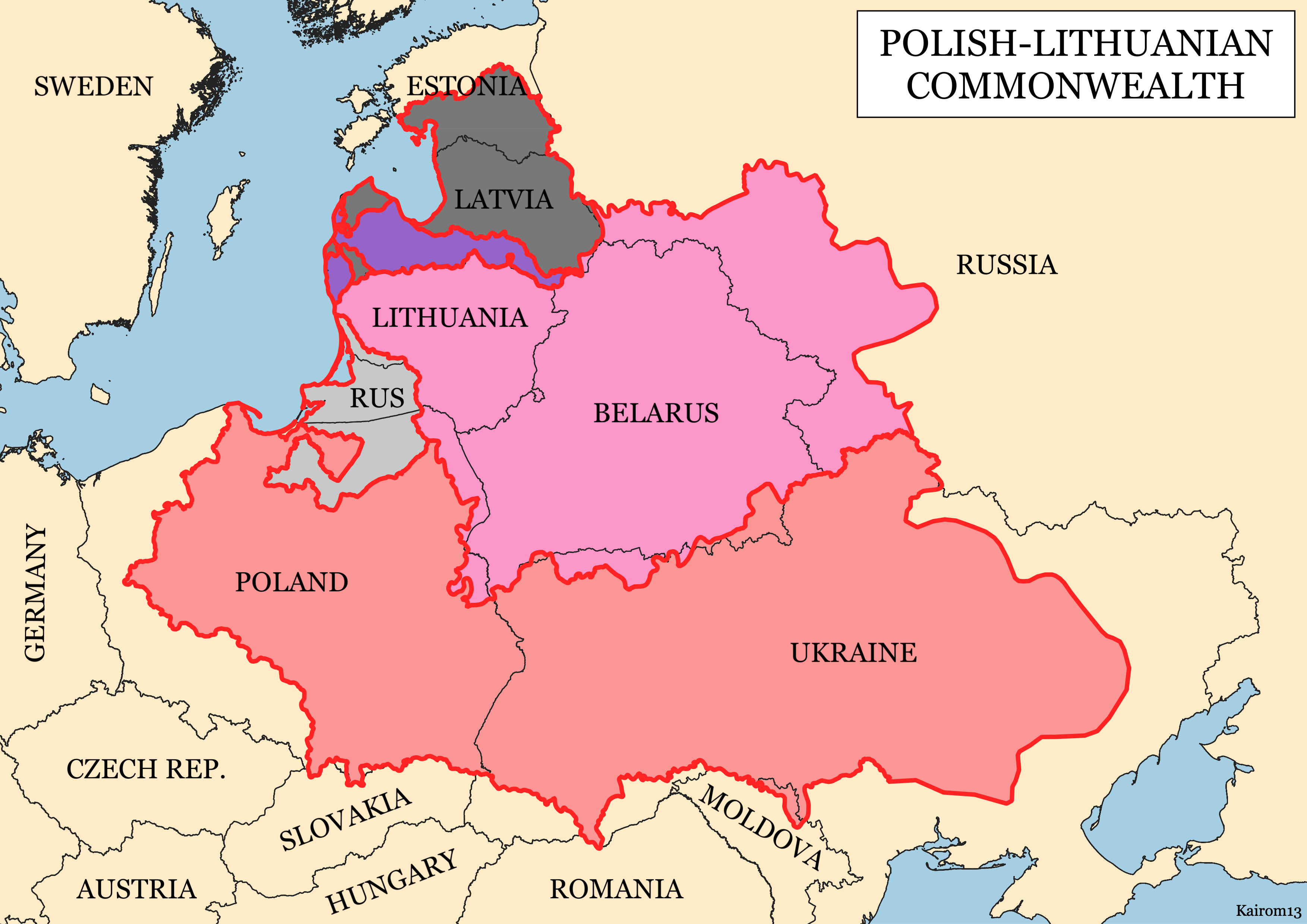
The economy of the Polish-Lithuanian Commonwealth in this period was almost exclusively based on growing crops within a system of the so-called folwarks, the largest of which could be compared to latifundial estates running on serf labour – part of the essentially anti-modern socio-political order which Sowa describes as a "conflation of slavery and the nobility's license, set up within the framework of a backward agrarian empire". Most of the grain was then exported to Western Europe, so that szlachta even pictured Poland as the granary of Europe.
While this may have been the case at some point, by the 16th century this situation began to rapidly change. The more and more innovative and competitive agriculture in the West gradually made Polish grain uncompetitive. The only way for the nobility to stay in the game (which for them meant lucrative income) was to look for ways to increase production – but this could be only accomplished by either a greater oppression of serfs (see above) or colonizing more land...
Από τις βασικές αιτίες όλου αυτού χάους ήταν ο θεσμός τη αιρετής μοναρχίας
 Δυστυχώς η κοινοπολιτεία δεν κατάφερε ποτέ να ακολουθήσει το παράδειγμα της Γαλλίας ή της Αγγλίας και η χώρα έμεινε κυριολεκτικά όμηρος μιας κάστας γαιοκτημόνων που μέσω των sjem ευνούχιζαν την εκτελεστική εξουσία και έκαναν ο,τι μπορούσαν για να μετατρέψουν το υπόλοιπο 80% του πληθυσμού κυριολεκτικά σε δούλους
 Μagnates (or higher nobility) vied for political power with the lesser and middle nobility (Ruch egzekucyjny in the late 16th century, and the reform movement of the Great Sejm in the late 18th century) and the King.[1] To be counted among the magnates, one should have a large estate, and political influence at least on the scale of a province, if not national.[1] Regional differences abounded, with the estates being much larger in the east, where the wealthier magnates were also much more likely to have their own private armies.[1][2] The eastern territories were more independent from the central power, and the large estates there, known as latifundia, with private cities and armies of the magnates, gave rise there to the term królewięta ("little kings") used for the wealthiest of them - the developing aristocracy.[3][4] The magnates in the Royal Prussia had their fortunes build not around their own lands, but the royal grants (królewszczyzny).[1] The magnates tried to avoid splitting up of their lands, and some of the wealthiest families were able to protect their lands from division through the ordynacja system.[1] Magnate residences often became cultural and economic centers for a given region.[1]
Social mobility was present, in a limited fashion, as while the magnates preferred to marry within their own ranks, particularly wealthy of famous lesser nobles were able to join their ranks over time; this was the case with the Koniecpolski family, Ossoliński family and the Zamoyski family.[1]
From the late 16th century the influence of the magnates on Commonwealth politics rose sharply, through their participation in the administrative system (see offices of the Polish-Lithuanian Commonwealth) and their control over the lesser nobility, which allowed them to influence the parliaments (local sejmiks and the national sejm walny) of the country.[1] From the second half of the 17th century, the magnates emerged as the victors in the struggle for power in the Polish-Lithuanian Commonwealth, leading some scholar to refer to this period as a time of the magnate oligarchy.[1] As Norman Davies noted, at that time "political life [of Poland] was reduced to the feuds, fortunes, and the follies of a few families".[5] Faced with the weakness of the king and parliament, the magnates were even able on occasion to start border wars (Magnate Moldavian Wars, the Dimitriads) or civil wars (Radziwiłł's rebellion during The Deluge, and the Sapieha's-centered Lithuanian Civil War of 1700).[1] Some magnates were also elected as kings of the Commonwealth; namely Michał Korybut Wiśniowiecki and Stanisław August Poniatowski (a relative of the Czartoryski family).[6][7]
https://en.wikipedia.org/wiki/Magnates_ ... _Lithuania