AlienWay έγραψε: 14 Αύγ 2023, 03:46
ince
, both Cossman and Brown cite a 2014 policy released by the Ontario Human Rights Commission (OHRC) for guidance.
Page 18 reads: “Gender-based harassment can involve: (5) Refusing to refer to a person by their self-identified name and proper personal pronoun.”
The policy itself is not legally binding, Cossman says, but a human rights tribunal “does tend to follow the policy that’s articulated.”
The OHRC is a provincial body, however — whereas Bill C-16 is federal — but Brown says the Department of Justice has said the federal guidelines will mirror the OHRC policy.
https://www.cbc.ca/cbcdocspov/features/ ... -explained
αυτό το'βαλες για ν'αποδείξεις ότι δεν λέει πίπες ο JP;

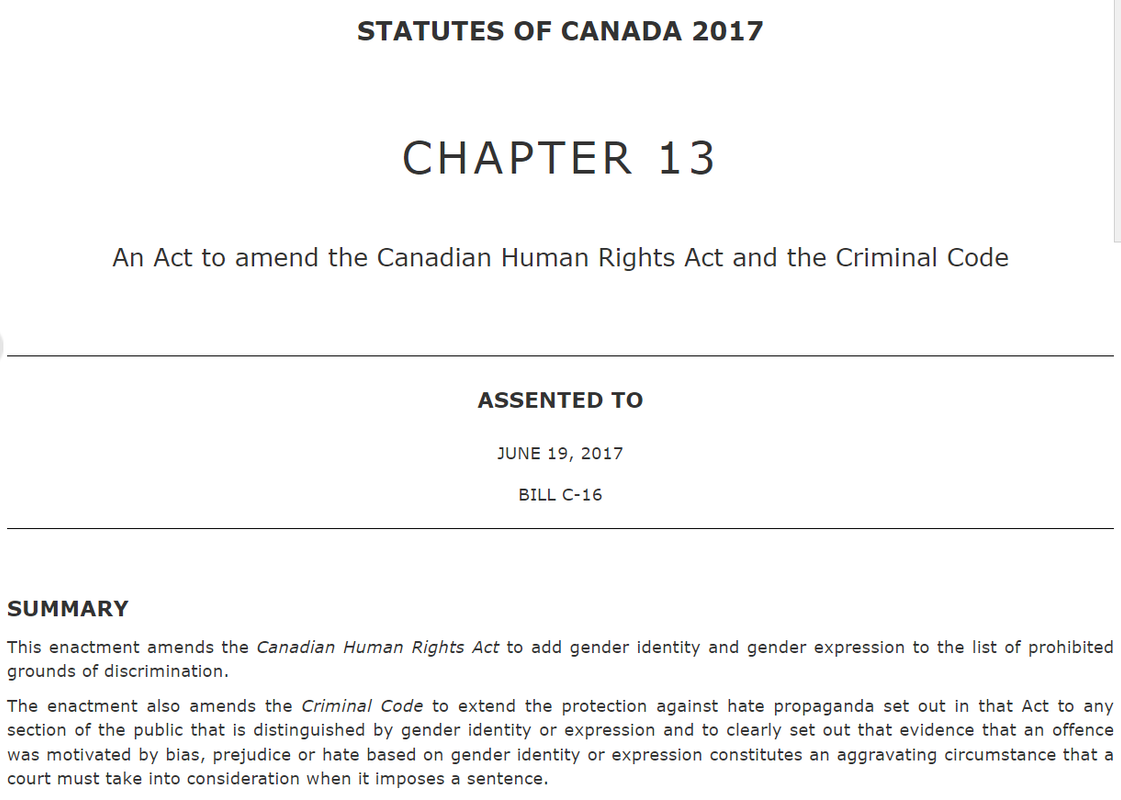
το΄χα δει κι εγώ και λέει το ακριβώς αντίθετο. το απόσπασμα που έβαλες αφορά οδηγία περιφερειακής επιτροπής ανθρωπίνων δικαιωμάτων η οποία προυπήρχε τού νόμου που ψηφίστηκε το 2017, ενώ λέει ξεκάθαρα ότι ο νόμος δεν αναφέρει pronouns. όπως λέει και στον υπότιτλο:
The bill sparked a national debate, but actually brought federal laws up to date with already-established provincial human rights code
από κει και πέρα, εξηγεί ότι το misgendering από μόνο του δεν στοιχειοθετεί έγκλημα στον ΠΚ, αλλά θα μπορούσε να γίνει καταγγελία για παραβίαση ανθρωπίνων δικαιωμάτων σε περίπτωση εσκεμμένης παρενόχλησης.
Pronoun usage
Does the bill legislate the use of certain language? And could someone go to jail for using the wrong pronoun?
In the Criminal Code, which does not reference pronouns, Cossman says misusing pronouns alone would not constitute a criminal act.
“The misuse of gender pronouns, without more, cannot rise to the level of a crime,” she says. “It cannot rise to the level of advocating genocide, inciting hatred, hate speech or hate crimes … (it) simply cannot meet the threshold.”
The Canadian Human Rights Act does not mention pronouns either. The act protects certain groups from discrimination.
“Would it cover the accidental misuse of a pronoun? I would say it’s very unlikely,” Cossman says. “Would it cover a situation where an individual repeatedly, consistently refuses to use a person’s chosen pronoun? It might.”
η OHRC έδωσε και περαιτέρω διευκρινίσεις για όσους μπερδεύονται. βασικά ο νόμος καλύπτει συστημικές διακρίσεις και όχι πίπες που γράφονται στο τουίτερ, εκτός αν είναι σε βαθμό που συνιστά hate speech.
What does the Ontario Human Rights Code say about gender issues?
Ontario added explicit protection for gender identity and gender expression to the Code in 2012.
The Code prohibits discrimination and harassment against trans people in employment, services (including education, policing, health care, restaurants, shopping malls, etc.), housing, contracts and membership in vocational associations. The Code does not specify the use of any particular pronoun or other terminology.
Is it a violation of the Code to not address people by their choice of pronoun?
The law recognizes that everyone has the right to self-identify their gender and that “misgendering” is a form of discrimination.
As one human rights tribunal said: “Gender …may be the most significant factor in a person’s identity. It is intensely personal. In many respects how we look at ourselves and define who we are starts with our gender.”[1] The Tribunal found misgendering to be discriminatory in a case involving police, in part because the police used male pronouns despite the complainant’s self-identification as a trans woman.
Refusing to refer to a trans person by their chosen name and a personal pronoun that matches their gender identity, or purposely misgendering, will likely be discrimination when it takes place in a social area covered by the Code, including employment, housing and services like education. The law is otherwise unsettled as to whether someone can insist on any one gender-neutral pronoun in particular.
Gender-neutral pronouns may not be well known. Some people may not know how to determine what pronoun to use. Others may feel uncomfortable using gender-neutral pronouns. Generally, when in doubt, ask a person how they wish to be addressed. Use “they” if you don’t know which pronoun is preferred.[2] Simply referring to the person by their chosen name is always a respectful approach.
Doesn’t this interfere with freedom expression?
Our lawmakers and courts recognize the right to freedom of expression, and at the same time, that no right is absolute. Expression may be limited where, for example, it is hate speech under criminal law.
The Supreme Court has also found that some limits on free speech are justifiable to protect people from harassment and discrimination in social areas like employment and services.[3] On the other hand, decision-makers have said that freedom of expression is much less likely to be limited in the context of a public debate on social, political or religious issues in a university or a newspaper.[4]
In situations where equality rights and freedom of expression must be balanced, context is critical.[5] The words that are chosen matter: the more harmful the words, the further they are from the core values of freedom of expression.[6] Other important considerations are the vulnerability of the group affected by the speech, and the degree of impact on their ability to access employment, services and housing on an equal basis.[7]
https://www.ohrc.on.ca/en/questions-and ... d-pronouns




 There are decades where you fuck around and days where you find out