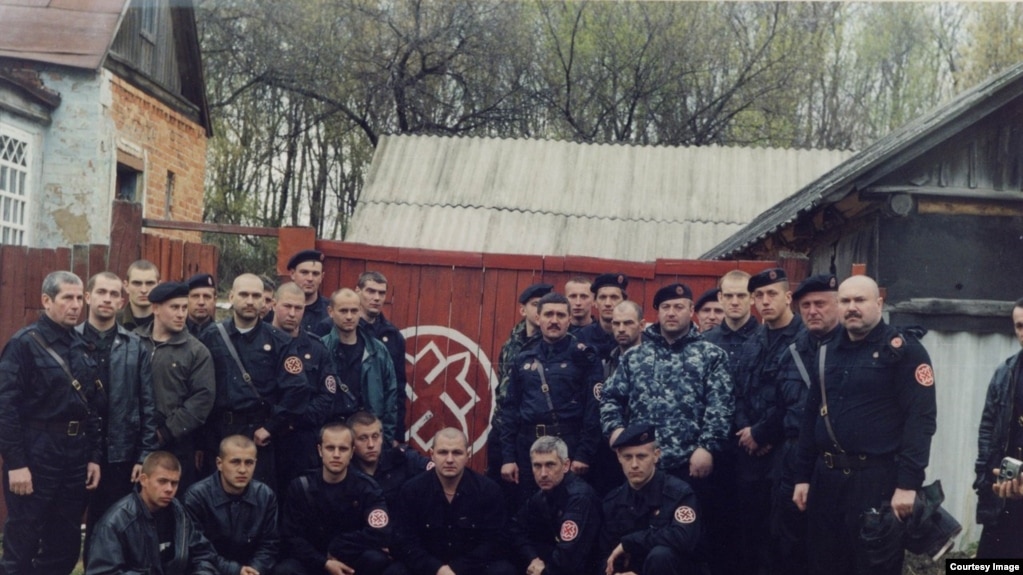
οι παραστρατιωτικοί στην Ουκρανία
Δημοσιεύτηκε: 16 Απρ 2022, 15:27
https://www.sott.net/article/466340-Ret ... in-Ukraine
Retired Swiss Military-Intelligence Officer: 'Is it Possible to Actually Know What Has Been And is Going on in Ukraine?'
The Ukrainian army was then in a deplorable state. In October 2018, after four years of war, the chief Ukrainian military prosecutor, Anatoly Matios, stated that Ukraine had lost 2,700 men in the Donbass: 891 from illnesses, 318 from road accidents, 177 from other accidents, 175 from poisonings (alcohol, drugs), 172 from careless handling of weapons, 101 from breaches of security regulations, 228 from murders and 615 from suicides.
The Ukrainian army was then in a deplorable state. In October 2018, after four years of war, the chief Ukrainian military prosecutor, Anatoly Matios, stated that Ukraine had lost 2,700 men in the Donbass: 891 from illnesses, 318 from road accidents, 177 from other accidents, 175 from poisonings (alcohol, drugs), 172 from careless handling of weapons, 101 from breaches of security regulations, 228 from murders and 615 from suicides.
In fact, the Ukrainian army was undermined by the corruption of its cadres and no longer enjoyed the support of the population. According to a British Home Office report, in the March/April 2014 recall of reservists, 70 percent did not show up for the first session, 80 percent for the second, 90 percent for the third, and 95 percent for the fourth. In October/November 2017, 70% of conscripts did not show up for the "Fall 2017" recall campaign. This is not counting suicides and desertions (often over to the autonomists), which reached up to 30 percent of the workforce in the ATO area. Young Ukrainians refused to go and fight in the Donbass and preferred emigration, which also explains, at least partially, the demographic deficit of the country.
The Ukrainian Ministry of Defense then turned to NATO to help make its armed forces more "attractive." Having already worked on similar projects within the framework of the United Nations, I was asked by NATO to participate in a program to restore the image of the Ukrainian armed forces. But this is a long-term process and the Ukrainians wanted to move quickly.
So, to compensate for the lack of soldiers, the Ukrainian government resorted to paramilitary militias. In 2020, they constituted about 40 percent of the Ukrainian forces and numbered about 102,000 men, according to Reuters. They were armed, financed and trained by the United States, Great Britain, Canada and France. There were more than 19 nationalities.
These militias had been operating in the Donbass since 2014, with Western support. Even if one can argue about the term "Nazi," the fact remains that these militias are violent, convey a nauseating ideology and are virulently anti-Semitic...[and] are composed of fanatical and brutal individuals. The best known of these is the Azov Regiment, whose emblem is reminiscent of the 2nd SS Das Reich Panzer Division, which is revered in the Ukraine for liberating Kharkov from the Soviets in 1943, before carrying out the 1944 Oradour-sur-Glane massacre in France.
The characterization of the Ukrainian paramilitaries as "Nazis" or "neo-Nazis" is considered Russian propaganda. But that's not the view of the Times of Israel, or the West Point Academy's Center for Counterterrorism. In 2014, Newsweek magazine seemed to associate them more with... the Islamic State. Take your pick!
So, the West supported and continued to arm militias that have been guilty of numerous crimes against civilian populations since 2014: rape, torture and massacres...
The integration of these paramilitary forces into the Ukrainian National Guard was not at all accompanied by a "denazification," as some claim.
Retired Swiss Military-Intelligence Officer: 'Is it Possible to Actually Know What Has Been And is Going on in Ukraine?'
The Ukrainian army was then in a deplorable state. In October 2018, after four years of war, the chief Ukrainian military prosecutor, Anatoly Matios, stated that Ukraine had lost 2,700 men in the Donbass: 891 from illnesses, 318 from road accidents, 177 from other accidents, 175 from poisonings (alcohol, drugs), 172 from careless handling of weapons, 101 from breaches of security regulations, 228 from murders and 615 from suicides.
The Ukrainian army was then in a deplorable state. In October 2018, after four years of war, the chief Ukrainian military prosecutor, Anatoly Matios, stated that Ukraine had lost 2,700 men in the Donbass: 891 from illnesses, 318 from road accidents, 177 from other accidents, 175 from poisonings (alcohol, drugs), 172 from careless handling of weapons, 101 from breaches of security regulations, 228 from murders and 615 from suicides.
In fact, the Ukrainian army was undermined by the corruption of its cadres and no longer enjoyed the support of the population. According to a British Home Office report, in the March/April 2014 recall of reservists, 70 percent did not show up for the first session, 80 percent for the second, 90 percent for the third, and 95 percent for the fourth. In October/November 2017, 70% of conscripts did not show up for the "Fall 2017" recall campaign. This is not counting suicides and desertions (often over to the autonomists), which reached up to 30 percent of the workforce in the ATO area. Young Ukrainians refused to go and fight in the Donbass and preferred emigration, which also explains, at least partially, the demographic deficit of the country.
The Ukrainian Ministry of Defense then turned to NATO to help make its armed forces more "attractive." Having already worked on similar projects within the framework of the United Nations, I was asked by NATO to participate in a program to restore the image of the Ukrainian armed forces. But this is a long-term process and the Ukrainians wanted to move quickly.
So, to compensate for the lack of soldiers, the Ukrainian government resorted to paramilitary militias. In 2020, they constituted about 40 percent of the Ukrainian forces and numbered about 102,000 men, according to Reuters. They were armed, financed and trained by the United States, Great Britain, Canada and France. There were more than 19 nationalities.
These militias had been operating in the Donbass since 2014, with Western support. Even if one can argue about the term "Nazi," the fact remains that these militias are violent, convey a nauseating ideology and are virulently anti-Semitic...[and] are composed of fanatical and brutal individuals. The best known of these is the Azov Regiment, whose emblem is reminiscent of the 2nd SS Das Reich Panzer Division, which is revered in the Ukraine for liberating Kharkov from the Soviets in 1943, before carrying out the 1944 Oradour-sur-Glane massacre in France.
The characterization of the Ukrainian paramilitaries as "Nazis" or "neo-Nazis" is considered Russian propaganda. But that's not the view of the Times of Israel, or the West Point Academy's Center for Counterterrorism. In 2014, Newsweek magazine seemed to associate them more with... the Islamic State. Take your pick!
So, the West supported and continued to arm militias that have been guilty of numerous crimes against civilian populations since 2014: rape, torture and massacres...
The integration of these paramilitary forces into the Ukrainian National Guard was not at all accompanied by a "denazification," as some claim.