Σελίδα 5 από 5

Re: Η Σινδόνη τού Τορίνο

Δημοσιεύτηκε: 10 Μάιος 2021, 20:52
από pussycat
Η συντριπτική πλειοψηφία των επιστημόνων υποστηρίζει πως η σινδόνη:

α) χρονολογείται κάπου στον μεσαίωνα
β) είναι κάποιου είδους τέχνη

Διένεξη μεταξύ τους υπάρχει μόνο σχετικά με το πώς καλλιτεχνήθηκε και άντεξε στον χρόνο, και όχι για το αν είναι η αυθεντική απεικόνιση του Χριστού, κάτι το οποίο έχει διαψευστεί κατηγορηματικά.

Re: Η Σινδόνη τού Τορίνο

Δημοσιεύτηκε: 11 Μάιος 2021, 19:07
από Στρακαστρουκας
https://el.wikipedia.org/wiki/%CE%86%CE ... E%B9%CE%BF

Υπαρχει μια αναλογη παλαιοτερη ιστορια με το ιερον Μανδυλιον

Re: Η Σινδόνη τού Τορίνο

Δημοσιεύτηκε: 12 Μάιος 2021, 04:55
από Who is The 4th man
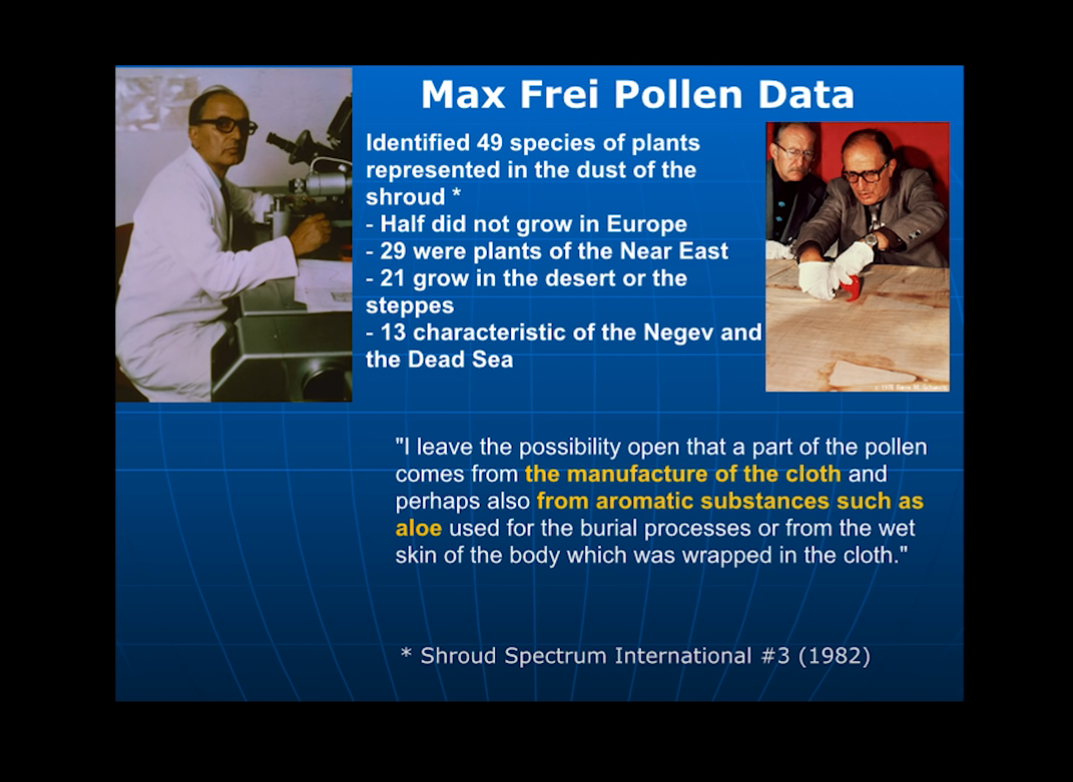
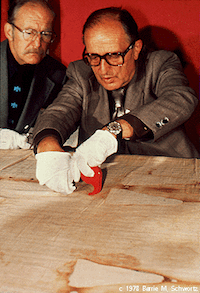
από την ανάλυση ενος κοματιου της Σινδόνης τορίνου πού έκανε ό εγκληματολόγος
Max Frei βρέθηκαν ίχνη γυρης καί ίχνη λουλουδιών πού βρίσκονται μονο στη περιοχή των
Ιεροσολύμων και Ιεριχούς.....
Εικόνα

https://earlychurchhistory.org/christia ... t-is-real/

παρακαλω διαβάζουμε,πρεπει να γίνουμε διαβαστερά παιδιά :lol:
"Scientists and technicians took note and have studied the Shroud ever since. Some have concluded it is the true burial shroud of Jesus. Others have pronounced it a medieval forgery. But in 1978 a noted Swiss criminologist, Dr. Max Frei, took sticky tape samples from the Shroud lifted up from the fibers and found—POLLEN GRAINS.

Enter into the pollen/floral discussion two Israeli professors: Botanist Avinoam Danin of Jerusalem’s Hebrew University who published nine books on the flora of the Middle East and Dr. Uri Baruch, a palynologist (science of pollen and spores) and authority on Israeli antiquities
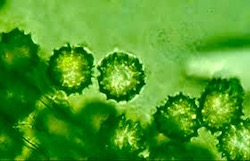
Avinoam and Baruch found that of the hundreds of floral patterns and pollen grains found on the Shroud twenty-eight of them are from plants still growing in Israel and 70% of them are found in the area from Jerusalem to Jericho (e.g. Gundelia tournefortii, Zygophyllum dumosum, Cistus creticus, Capparis aegyptis). Half of the floral images and pollen grains from the plants are found only in the Middle East or other similar areas but never in Europe, the favored location of the forgery of the Shroud.
As was the Jewish burial custom in the time of Jesus, most of the flowers were clustered around the head and chest of the man on the Shroud. All twenty-eight of the flowers would have been available in Jerusalem markets for fresh and burial bouquets. Many would have been growing along the roadside or in nearby fields and could have been gathered to honor the dead man. Twenty-seven of the identified plants are in bloom in March and April. Jesus was crucified in Jerusalem during the Passover in the Spring of c. 30 AD. (Matthew 26:12; Mark 14:1; Luke 22:1,7: John 18:28)

The scientists’ analyses positively identified many grains of pollen of the Gundelia tournefortii which has large thorns and blooms in Israel between March and May. Most of the grains of pollen from that plant have been recovered near the man’s shoulder. Could it have been the crown of thorns:
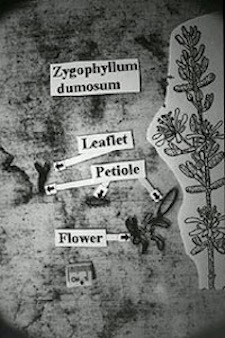
There were, also, small images of flowers on the Shroud. A flower seen in a clear image on the chest area of the Shroud is of the Zygophyllum dumosum species (left). The leaflet, petal and flower of Zygophyllum on the Shroud are highlighted in black.

According to Dr. Danin, the botanist, the plants Gundelia and Zygophyllum only coexist in a small area bounded by the lines linking Jerusalem and Jericho in Israel and Madaba and Karak in Jordan. “This combination of flowers can be found in only one region of the world,” Danin stated. “The evidence clearly points to a floral grouping from the area surrounding Jerusalem.” The two scientists are convinced from the pollen and floral patterns on the Shroud that the Shroud originated in Israel.

In addition to being unable to explain so many things about the Shroud of Turin, did it ever occur to modern skeptics that no medieval forger would have been able to forge pollen grains and floral images. Pollen grains are able to be seen only through a microscope. A medieval artist/forger did not even KNOW about individual GRAINS of pollen, could never ever have seen a microscopic grain of pollen—until the 1800’s AD.—Sandra Sweeny Silver"
Εικόνα

Εικόνα

Εικόνα

Εικόνα

Re: Η Σινδόνη τού Τορίνο

Δημοσιεύτηκε: 12 Μάιος 2021, 05:07
από Who is The 4th man
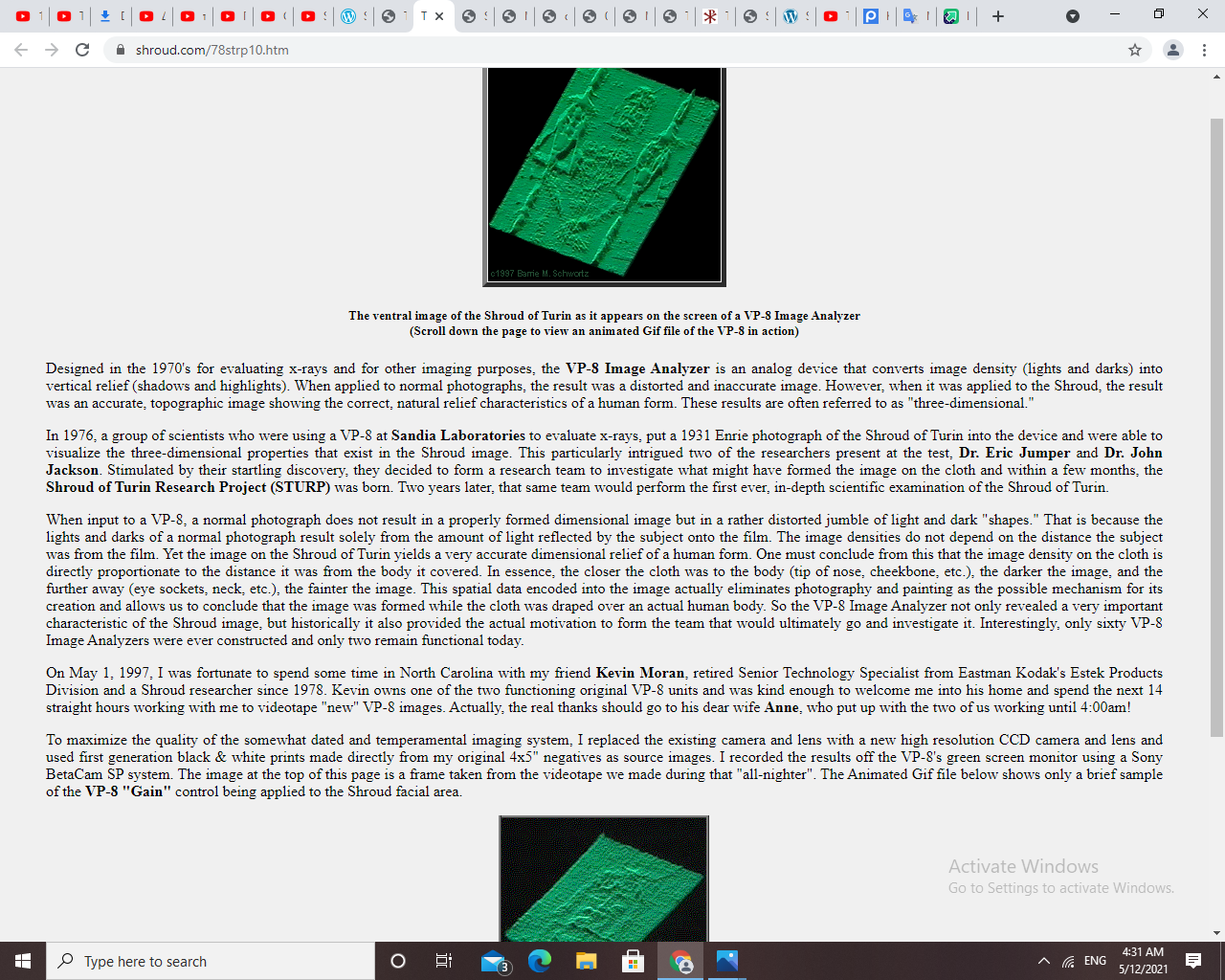
απ'την ανάλυση VP-8 της ομάδας STURP-1978

https://shroud.com/78strp10.htm

Εικόνα

διαβάζουμε.....
"When input to a VP-8, a normal photograph does not result in a properly formed dimensional image but in a rather distorted jumble of light and dark "shapes." That is because the lights and darks of a normal photograph result solely from the amount of light reflected by the subject onto the film. The image densities do not depend on the distance the subject was from the film. Yet the image on the Shroud of Turin yields a very accurate dimensional relief of a human form. One must conclude from this that the image density on the cloth is directly proportionate to the distance it was from the body it covered. In essence, the closer the cloth was to the body (tip of nose, cheekbone, etc.), the darker the image, and the further away (eye sockets, neck, etc.), the fainter the image. This spatial data encoded into the image actually eliminates photography and painting as the possible mechanism for its creation and allows us to conclude that the image was formed while the cloth was draped over an actual human body. So the VP-8 Image Analyzer not only revealed a very important characteristic of the Shroud image, but historically it also provided the actual motivation to form the team that would ultimately go and investigate it. Interestingly, only sixty VP-8 Image Analyzers were ever constructed and only two remain functional today.

On May 1, 1997, I was fortunate to spend some time in North Carolina with my friend Kevin Moran, retired Senior Technology Specialist from Eastman Kodak's Estek Products Division and a Shroud researcher since 1978. Kevin owns one of the two functioning original VP-8 units and was kind enough to welcome me into his home and spend the next 14 straight hours working with me to videotape "new" VP-8 images. Actually, the real thanks should go to his dear wife Anne, who put up with the two of us working until 4:00am!

To maximize the quality of the somewhat dated and temperamental imaging system, I replaced the existing camera and lens with a new high resolution CCD camera and lens and used first generation black & white prints made directly from my original 4x5" negatives as source images. I recorded the results off the VP-8's green screen monitor using a Sony BetaCam SP system. The image at the top of this page is a frame taken from the videotape we made during that "all-nighter". The Animated Gif file below shows only a brief sample of the VP-8 "Gain" control being applied to the Shroud facial area."

δεν γινεται αυτό το αποτύπωμα με ζωγραφιά,ούτε με τεχνολογία 21αιωνα


to be continued "Shroud of Tourin Wars" :a010:

Re: Η Σινδόνη τού Τορίνο

Δημοσιεύτηκε: 30 Νοέμ 2024, 22:18
από regarding_to_Being
Για περισσότερα από 10 χρόνια, ο Rucker έχει μελετήσει τη φυσική της εξαφάνισης του σώματος του Ιησού και το αποτύπωμά του στο σάβανο
Για αιώνες οι Χριστιανοί αποδίδουν μια χρονολόγηση του πρώτου αιώνα στη Σινδόνη του Τορίνο. Ο πυρηνικός μηχανικός Robert Rucker λέει ότι η τελευταία του έρευνα για το σάβανο το επιβεβαιώνει.

«Η Σινδόνη του Τορίνο είναι το δεύτερο πιο πολύτιμο κτήμα της ανθρώπινης φυλής δίπλα στην ίδια τη Βίβλο», είπε ο Ράκερ στο CNA. Το σάβανο σώζεται σήμερα στο παρεκκλήσι της Ιεράς Σινδόνης δίπλα στον καθεδρικό ναό του Αγίου Ιωάννη του Βαπτιστή στο Τορίνο (Τορίνο), Ιταλία.

Για περισσότερα από 10 χρόνια, ο Rucker έχει μελετήσει τη φυσική της εξαφάνισης του σώματος του Ιησού και το αποτύπωμά του στο σάβανο. Ο ιστότοπός του, Shroud Research, αμφισβητεί τα συμπεράσματα ότι το σάβανο χρονολογείται από την περίοδο 1260 έως 1380 μ.Χ., οδηγώντας τους σκεπτικιστές στο συμπέρασμα ότι είναι ένα μεσαιωνικό ψεύτικο.
Το 1988, οι επιστήμονες χρησιμοποίησαν μικροσκοπικά δείγματα που κόπηκαν από το σάβανο για να προσδιορίσουν την ποσότητα των ισοτόπων άνθρακα 14 που περιείχαν, καταστρέφοντας τα δείγματα στη διαδικασία. Το ισότοπο ραδιενεργού άνθρακα 14 είναι μια παραλλαγή περίσσειας νετρονίων που περιέχει άνθρακα, τα οποία είναι σωματίδια μικρότερα από τα άτομα. Με την πάροδο του χρόνου, ο άνθρακας 14 διασπάται σε άζωτο 14 σε οργανικά υλικά όπως οστά και φυτική ύλη. Η αναλογία των ατόμων άνθρακα 14 που απομένουν σε ένα δείγμα παρέχει τα δεδομένα που απαιτούνται για την εκτίμηση της ηλικίας του δείγματος.

Η έρευνα
Ο Rucker είπε ότι οι υπολογισμοί του δείχνουν ότι η χρονολόγηση του άνθρακα 14 του 1988 είναι λανθασμένη επειδή δεν λαμβάνει υπόψη την ακτινοβολία που εκπέμπεται από το σώμα του Ιησού κατά την ανάσταση, η οποία περιελάμβανε νετρόνια που απορροφήθηκαν από το σάβανο και σχημάτισαν νέα άτομα άνθρακα 14, οδηγώντας έτσι σε παρερμηνεία των δεδομένων.

«Οι ημερομηνίες του άνθρακα 14 μπορεί να είναι πολύ λανθασμένες εάν κάτι έχει αλλάξει την αναλογία c-14 προς c-12 στο δείγμα, εκτός από τη διάσπαση του άνθρακα 14», εξήγησε ο Rucker. «Υπήρξαν έξι διαφορετικές εξηγήσεις για την ημερομηνία άνθρακα του 1260-1380. Η πρώτη εξήγηση ήταν σε μια επιστολή προς τον εκδότη του περιοδικού Nature το 1989. Ο Tom Philips, ο οποίος είναι κάτοχος Ph.D. στη σωματιδιακή φυσική, πρότεινε στη Φύση ότι η πιο προφανής εξήγηση είναι ότι νέα άτομα άνθρακα 14 παρήχθησαν με απορρόφηση νετρονίων» στο σάβανο.

«Αυτή η πρόταση», είπε ο Ράκερ, «δεν δόθηκε ποτέ συνέχεια μέχρι που έκανα τους υπολογισμούς στον υπολογιστή πυρηνικής ανάλυσης το 2014».

Ο Rucker θα προσφέρει ένα εργαστήριο σχετικά με την έρευνά του στις 6-7 Οκτωβρίου στο St. Thomas the Apostle Parish και στο Πανεπιστήμιο του Michigan στο Ann Arbor, Michigan. Απέκτησε το πτυχίο και το μεταπτυχιακό του στο Πανεπιστήμιο του Michigan-Ann Arbor καθώς και πιστοποιητικά επαγγελματικού μηχανικού στην πυρηνική μηχανική και τη μηχανολογία.

Τα διαπιστευτήριά του ενισχύουν τα 38 χρόνια εμπειρίας στη βιομηχανία πυρηνικής ενέργειας, η οποία απαιτούσε την πραγματοποίηση υπολογισμών πυρηνικής ανάλυσης σε υπολογιστή που σχετίζονται με το σχεδιασμό πυρηνικών αντιδραστήρων και τη στατιστική ανάλυση των πειραματικών δεδομένων. Ερευνά το σάβανο από το 2013 και έχει πραγματοποιήσει υπολογισμούς πυρηνικής ανάλυσης σε υπολογιστή που σχετίζονται με την ημερομηνία του.

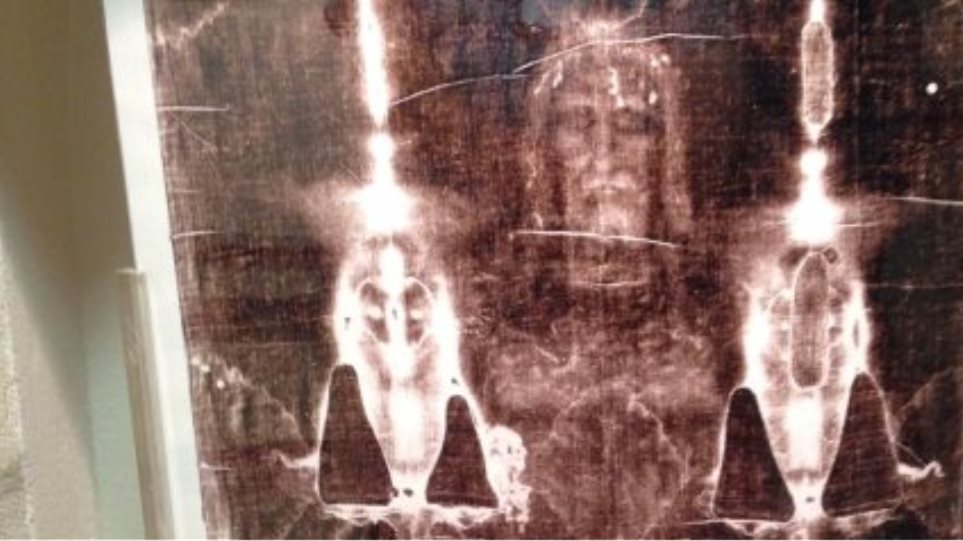
Η Paola Conti-Puorger, η οποία είναι κάτοχος διδακτορικού διπλώματος αεροδιαστημικής μηχανικής και μεταπτυχιακού τίτλου σπουδών στο σάβανο από το Pontifical Athenaeum Regina Apostolorum στη Ρώμη, είναι ενορίτης του Αγίου Θωμά και διαχειρίζεται τη μόνιμη έκθεση Othonia στο σάβανο, η οποία περιλαμβάνει μια φωτογραφική αναπαραγωγή , ένα τρισδιάστατο ολόγραμμα και μια χάλκινη ομοιότητα του Ιησού που βρίσκεται στον τάφο πριν την ανάστασή του, όπως αποκαλύπτεται από το αποτύπωμα στο σάβανο.
Το Othonia είναι ένα ερευνητικό κέντρο με έδρα τη Ρώμη, αφιερωμένο στη διατήρηση, την προώθηση και τη διάδοση της γνώσης για το σάβανο. Αποτελεί μέρος του Ινστιτούτου Επιστήμης και Πίστεως εντός του Athenaeum.

“Η Rucker έχει μελετήσει το σάβανο για χρόνια και μπορεί να προσφέρει μια έγκυρη λέξη για την επιστημονική έρευνα σε αυτό”, είπε στο CNA.
«Το σάβανο είναι τα καλύτερα νέα που μπορούμε να λάβουμε σε αυτή τη ζωή: ότι οι αμαρτίες μας συγχωρούνται, ότι μας αγαπούν, ότι έχουμε μια σημαντική αξιοπρέπεια, ότι καλούμαστε σε αυτήν την εικόνα μέσα μας και ότι καλούμαστε να αγαπήσουμε με την ίδια αγάπη. Αυτή είναι η αλήθεια και η πραγματική ευτυχία της ανθρωπότητας», είπε η Conti-Puorger.

«Είναι σαν να συλλογίζεσαι το Ευαγγέλιο και να το βλέπεις πολύ ζωντανό. Όπως η Ευχαριστία, το σώμα και το αίμα του Χριστού είναι εκεί. Αυτή είναι μια ζωντανή παρουσία. Δεν είναι λείψανο», είπε.
Εικόνα

συνεχεια

Re: Η Σινδόνη τού Τορίνο

Δημοσιεύτηκε: 30 Νοέμ 2024, 22:25
από regarding_to_Being
The Shroud Research Network
Seeking Solutions to the Mysteries of the Shroud.

This website is devoted to pursuing, as far as possible, the best explanations for the mysteries of the Shroud of Turin through research and conferences. The mysteries of the Shroud include:


Why can we see the image of a crucified man on the Shroud?

How was the image formed?

When was the Shroud made?

What about the 1988 carbon dating of the Shroud?

What is the nature of the apparent blood on the Shroud?

How did the blood get onto the Shroud?

Could the Shroud of Turin be the burial cloth of Jesus?


Bob Rucker, MS, PE, PE
Short Biography


The Shroud Research Network
Seeking Solutions to the Mysteries of the Shroud.

This website is devoted to pursuing, as far as possible, the best explanations for the mysteries of the Shroud of Turin through research and conferences. The mysteries of the Shroud include:


Why can we see the image of a crucified man on the Shroud?

How was the image formed?

When was the Shroud made?

What about the 1988 carbon dating of the Shroud?

What is the nature of the apparent blood on the Shroud?

How did the blood get onto the Shroud?

Could the Shroud of Turin be the burial cloth of Jesus?


Link to the following sections:


1. What is the Shroud of Turin?

2. What is the history of the Shroud?

3. What does the image contain?

4. Scientific Investigation of the Shroud

5. Could the Shroud have been made by an artist or a forger?

6. Dating the Shroud

7. The 1988 Carbon Dating Problem

8. How can the mysteries of the Shroud be explained?

9. Could it be the authentic burial cloth of Jesus?

10. Summary of research on the Shroud


Click HERE to download our tri-fold brochure. Click HERE to download the same material as a three page summary. We give permission to use these items to promote the Shroud of Turin.

https://0201.nccdn.net/1_2/000/000/0fb/c4b/brochure.pdf

https://www.shroudresearch.net/

συνεχεια

Re: Η Σινδόνη τού Τορίνο

Δημοσιεύτηκε: 30 Νοέμ 2024, 22:27
από Αλιόσα
pussycat έγραψε: 10 Μάιος 2021, 20:52 Η συντριπτική πλειοψηφία των επιστημόνων υποστηρίζει πως η σινδόνη:

α) χρονολογείται κάπου στον μεσαίωνα
β) είναι κάποιου είδους τέχνη

Διένεξη μεταξύ τους υπάρχει μόνο σχετικά με το πώς καλλιτεχνήθηκε και άντεξε στον χρόνο, και όχι για το αν είναι η αυθεντική απεικόνιση του Χριστού, κάτι το οποίο έχει διαψευστεί κατηγορηματικά.
Τώρα λένε άλλα.

Re: Η Σινδόνη τού Τορίνο

Δημοσιεύτηκε: 30 Νοέμ 2024, 22:28
από regarding_to_Being
What is the Shroud of Turin?

The Shroud of Turin is also called the Turin Shroud, or just the Shroud. A shroud is a piece of cloth that is used to wrap a dead body for burial. Turin is a city in north-western Italy. Thus, the Shroud of Turin is a burial cloth located in Turin, Italy. It has been in Turin since 1578, and measures 14 feet 4 inches long by 3 feet 8 inches wide. The remarkable thing about this burial shroud is that it contains a front and back (dorsal) image of a man that was crucified exactly as the New Testament says that Jesus of Nazareth was crucified, yet the image contains no pigment. This is the only burial shroud with an image on it.

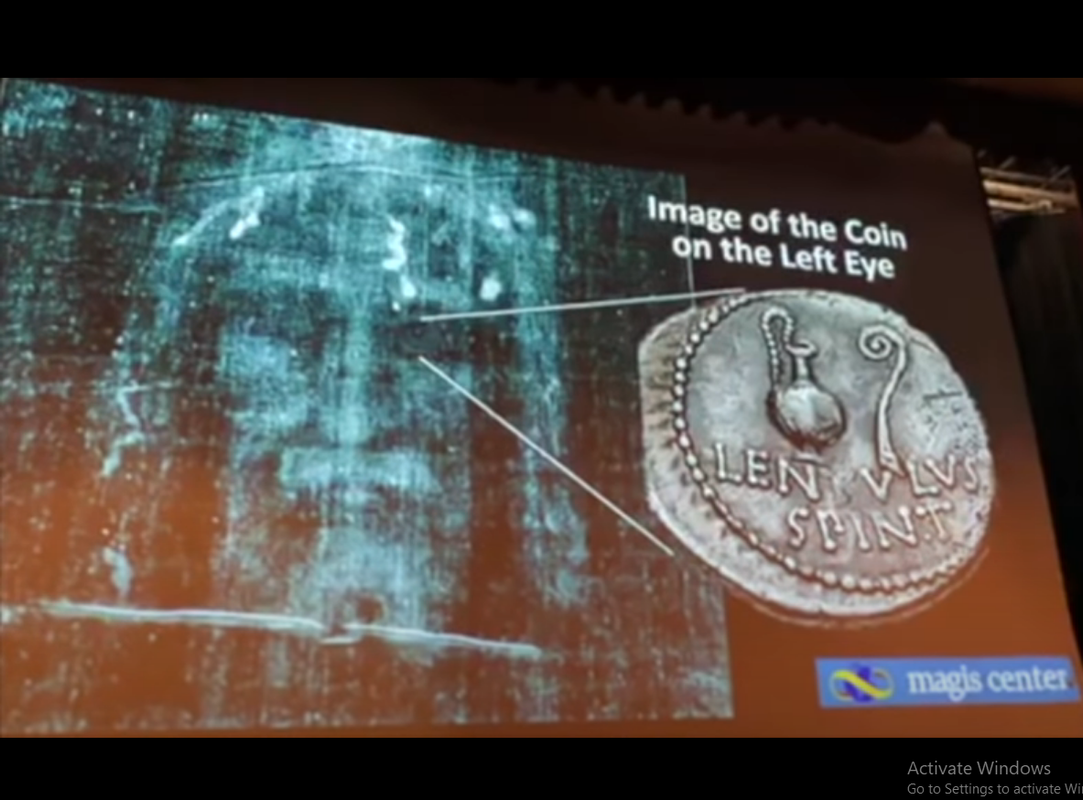
The Shroud of Turin has a continuously documented history back to about 1355 or 1356 when it went on display in Lirey, France, as the burial cloth of Jesus, but there is convincing evidence that it was in Constantinople prior to 1204. The amazing thing about this burial cloth is that it contains full size good resolution images of the front and back of a naked man that was crucified exactly as the New Testament says that Jesus of Nazareth was crucified, yet the images contain no pigment. When put on display in Turin, Italy, which usually occurs only a few times each century, millions of people file past the Shroud and see the images of the crucified man. Long standing tradition claims that the Shroud of Turin is the authentic burial cloth of Jesus. Ancient coins and artistic works are consistent with this view. The scientific investigation of the Shroud began in 1898 when Secondo Pia took the first photograph of the Shroud which revealed that the image was a good resolution negative image. The historical and scientific research on the Shroud since then makes it the most studied ancient artifact in existence. This scientific research has shown that the characteristics of the image are so unique that it could not be the result of a human agent, either an artist or forger, because the technology to create this image did not exist in any previous era and still does not exist even today. Based on this scientific research, the majority opinion of Shroud researchers is that the Shroud wrapped the dead body of a crucified man and that in some way this body encoded front and back images of itself onto the inside of the Shroud.

We believe that the evidence on the Shroud indicates that the front and back images of the crucified man were formed by radiation emitted from the body that altered the atomic structure of the atoms in the linen. We believe that the claimed C-14 date (1260 to 1390 AD) is a misinterpretation of the C-14 measurement data because neutrons were evidently included in the radiation from the body that caused the image. A small fraction of these neutrons would have been absorbed in the trace amount of N-14 in the cloth to form new C-14 atoms by the (N-14 + neutron produces C-14 + proton) reaction. The amount of C-14 at the sample location had to increase by only 16% to shift the C-14 date from the time of Jesus (about 33 AD) to the range of the carbon dating (1260 to 1390 AD). (See paper 19 on the RESEARCH page.)

συνεχεια

Re: Η Σινδόνη τού Τορίνο

Δημοσιεύτηκε: 30 Νοέμ 2024, 22:32
από regarding_to_Being
Scientific Investigation of the Shroud


Scientific investigation of the Shroud of Turin began in 1898 when an amateur photographer named Secondo Pia took the first photograph of the Shroud and found to his amazement that his negative was a high resolution positive image, which meant that the image on the Shroud was a high resolution negative image. This implied that it could not be a painting since artists cannot accurately produce a negative image because they never see one. Subsequent investigation of the wounds observed on the Shroud by experts in anatomy and medicine led them to conclude that the images and blood marks on the Shroud were in some way the result of a real human body that had been wrapped in the Shroud. In 1976, using a VP-8 image analyzer, it was discovered that there is 3D or topographical information in the image on the Shroud related to the body-to-cloth vertical distance. Since such information does not exist in any painting or photograph, this indicated that the image on the Shroud could not be a painting or photograph. This motivated scientists at leading national laboratories and research facilities in the United States to form the Shroud of Turin Research Project (STURP) to apply the best scientific methods and equipment to determine how the image on the Shroud was formed. About 24 of their team went to Turin in 1978 where they were allowed five days, 24 hours a day, to perform non-destructive testing on the Shroud. The STURP investigation found that:
· The image has no pigment, no carrier, no brush strokes, no clumping of material between the fibers or threads, no cracking due to centuries of folding or rolling the Shroud, and no stiffening of the cloth. This means that the image could not be due to paint, dye, or stain.
· There is no capillarity (soaking up of a liquid) of the discoloration in the fibers or threads, so the image could not be due to application of a liquid such as an acid or a chemical in a liquid state.
· The image is not luminescent under ultra-violet light. This means that the image could not be due to a scorch from contact of a hot object with the cloth.
· The image is only visible in front lighting. It is not visible in back lighting. From this, the STURP team concluded that the image does not result from any substance placed on the cloth, which means that the image could not be a rubbing, a dusting, or a print.
· A typical thread contains about 100 to 200 fibers. The image is caused discoloration of only the top one or two layers of fibers in a thread.
· On a discolored fiber, the discoloration is located on the outside circumference of the fiber, usually 360 degrees around the fiber. The thickness of this discolored layer is about 0.2 microns, which is less than a wavelength of light, and only a small fraction of the 15 to 20-micron diameter of a fiber. The inside of the fiber is not discolored.
· The discoloration of any fibers in the image results from a change in the electron bonding of the carbon atoms that were already in the cellulose molecule. This change in the electron bonding of the carbon atoms is equivalent to a dehydration and oxidation of the cellulose molecule. But how can this change in the electron bonding of the carbon atoms be accomplished to create an image of a crucified man?
(See paper 15 of the RESEARCH page.)

Εικόνα


συνεχεια

Re: Η Σινδόνη τού Τορίνο

Δημοσιεύτηκε: 30 Νοέμ 2024, 22:41
από regarding_to_Being
RETURN of the Nuclear Engineer & The Shroud of Turin | feat. Robert Rucker

Nuclear engineer Robert Rucker brings nearly 40 years of nuclear industry experience to his study of the mysterious Shroud of Turin. With over 30 scientific papers on the Shroud to his name, he joins host Mike Creavey again today to unpack some of his most recent findings and hypotheses.

LINKS/RESOURCES:
Robert Rucker’s “Shroud Research Network”: https://www.shroudresearch.net
==================


αγγλικα οχι αρπα κολα


to be continued

Re: Η Σινδόνη τού Τορίνο

Δημοσιεύτηκε: 01 Δεκ 2024, 10:47
από Καβαλάρης
regarding_to_Being έγραψε: 30 Νοέμ 2024, 22:41to be continued
Το να αντιγράφεις σκέτα κείμενα και μάλιστα στα αγγλικά είναι εναντίον των κανονισμών. Βάλε το λινκ και τέρμα.

Και στείλε στον κύριο Ράκερ αυτό:

https://apolloniustyaneus.blogspot.com/ ... m-for.html