Re: Εξελιξεις στην Γεωργία
Δημοσιεύτηκε: 13 Μάιος 2024, 23:33
Καλώς ήρθατε στο Phorum.com.gr Είμαστε εδώ πολλά ενεργά μέλη της διαδικτυακής κοινότητας του Phorum.gr που έκλεισε. Σας περιμένουμε όλους!
https://dev.phorum.com.gr/

ναι ρε αστοιχείωτε
καθένας με τον πόνο του!Dwarven Blacksmith έγραψε: 15 Μάιος 2024, 00:39 Και τώρα, ποιος θα δίνει τα good boy points και τα freedom indices; Ποιος θα οργανώνει την αόριστη λαϊκή δυσαρέσκεια σε απτά, βίαια αιτήματα για εκσυγχρονισμό και ένταξη στο ΝΑΤΟ; Ποιος θα διαλέγει το χρώμα και το σχήμα του συμβόλου των διαδηλωτών;

έτσι σάς είπαν να λέτε;dna replication έγραψε: 15 Μάιος 2024, 00:41ναι ρε αστοιχείωτε
ο νόμος για τον οποίο διαμαρτύρονται οι διαδηλωτες είναι αντιγραφή του foreign agents registration act που ισχύει στις ΗΠΑ
Κάποιοι τους παραπλανούν οτι Δύση σημαίνει μυστικές και υπόγειες χρηματοδοτήσεις
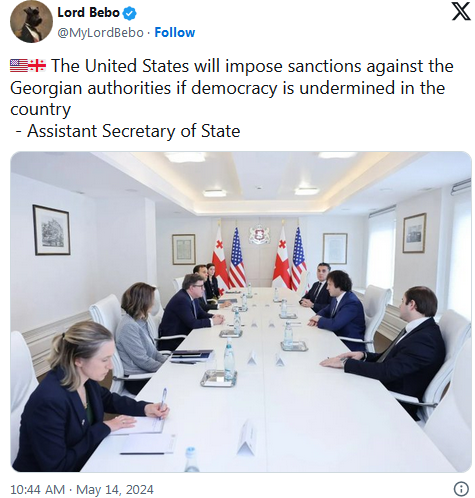
Bill Hicks έγραψε: 13 Μάιος 2024, 14:45 it's not "literally the same law" because some reporter said it, Bebo, there are fundamental differences:
https://civil.ge/archives/591175
the main one being:
so the Georgian law is the same as the russian law, where "foreign agent" may be based solely on funding, and in fact it is even more restrictive as it does not exclude religious organisations, which the russian law does:The US law makes no assumption that an organization or a person receiving funds from a foreign power is a foreign agent. The Georgian law assumes that only receiving foreign funds makes an organization a foreign agent. This is an extremely important difference. Georgian organizations which act only in Georgia’s interest – in providing benefits to its population – are labeled foreign agents. In America, individuals and organizations who receive foreign funds and carry out activities that benefit Americans are not labelled “foreign agents.” They are foreign agents only if they act on the specific instructions of a foreign principal.
US lawWhile many of us have called the Georgian law a “Russian law,” it is notable that the Russian law (like the US law) exempts religious organizations from its coverage. That would indicate that the Russian government is more tolerant on the subject of religious freedom than the Georgian government. The Georgian law’s apparently intentional decision to not exempt religious organizations, when the US and Russian laws do so, raises serious questions about the motivation for this particular legislative choice: against which religions and religious organizations will the Georgian foreign agents law be enforced?
Russia law
Georgia law

