

Πως και κανείς φορουμίτης δεν έχει αναρτήσει αυτή την δήλωση...

https://twitter.com/BGatesIsaPyscho/sta ... 0831196375
https://www.youtube.com/watch?v=PIKiTdP8w_Y
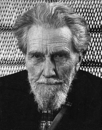
In its initial stages, Richard Coudenhove-Kalergi’s Paneuropa project was financed wholly from his private sources.Footnote 68 He quickly attracted enough attention to bring in other funding, mostly through elite circles of bankers, industrialists, and aristocrats. These comprised the Czech entrepreneur (and owner of the famous shoe production chain), Tomas Bata; the German industrialists Paul Silverberg, Carl Siemens, Adam Opel, Edmund Stinnes, Richard Gütermann, and Hermann Bücher (of the AEG, the German General Electricity Company); Carl Duisberg (of the Bayer corporation); a group of private German bankers; the Dutch industrialist N.V. Philips; and the Austrian Otto Böhler.Footnote 69 The US-American Carnegie Foundation for Peace, headed by Nicholas Murray Butler – who published a book on Paneuropa six years before Coudenhove’s first publication on the subject – also supported the project.Footnote 70 All of these figures, along with the governments of several European states, donated money in support of Pan-European’s activities.Footnote 71 In the later 1920s, the founders of the summer conference at Pontigny in France and the Mayrisch circle in Colpach, Luxembourg, were among Coudenhove’s social contacts.Footnote 72 These events were occasions for members of the industrial elites, especially of France, Belgium, Luxemburg, Germany, and Austria, to meet and discuss concerns as well as to invite writers and poets for entertainment and what could be described as public relations purposes. Coudenhove played a role as a mediator on these occasions. The nature of his connection with bankers and industrialists can be illustrated by taking a more detailed look at Coudenhove’s relationship with three of them: the Hamburg-based banker Max Warburg, heir to the European branch of the private bank M.M. Warburg & CO; the Stuttgart-based industrialist Robert Bosch; and the Luxemburg-based Emile Mayrisch.
Banker Max Warburg heard about Coudenhove’s enterprise through Baron Louis Rothschild and offered to support the project with 60,000 gold marks. In 1926, Warburg also sponsored the travel costs and royalties for speakers attending the Paneuropa Congress in Vienna.Footnote 73 Warburg was simultaneously financially supporting other similar movements, ranging from Die Deutsche Nation to the Nietzsche Archive, his brother’s Warburg Institute, and a number of other projects, seeking always to maximize his reach and influence. By the end of the 1920s, Warburg’s support for Paneuropa subsided, since, as he put it to Coudenhove, his concern was that the movement was not sufficiently pragmatic.
Bosch’s support came thanks to the mediation of another sponsor of Paneuropa, Richard Heilner (head of a German linoleum company in Wuerttemberg), who in 1927 recommended Coudenhove-Kalergi to Bosch.Footnote 74 Like Warburg, Robert Bosch was also investing in a number of rival political movements, including Karl Anton Rohan’s Kulturbund, but expressly demanded not to be listed as a public supporter. In fact, Bosch, who was a good friend of the British internationalist David Davies, was at first critical of Coudenhove-Kalergi’s exclusion of Britain from his proposed union, but was ultimately convinced and provided a link between Coudenhove-Kalergi and a number of British internationalists of the period. Bosch promised to contribute an annual sum of 2,500 Reichsmarks beginning in 1928, but in fact contributed even more until 1933. In 1930, he encouraged Coudenhove to found the ‘Society for the Promotion of the Paneuropean Cause’ (Pan-Europäische Förderungsgesellschaft) and took a seat on its directorial board. But Bosch withdrew his support immediately when the Nazi government officially blacklisted Paneuropa, significantly undermining Pan-European activities in Germany.
In addition to prominent figures representing individual banks and industry, like Warburg and Bosch, one of Coudenhove’s most successful networking connections was with the founder of the European steel cartel, the Luxemburg industrialist Emile Mayrisch. Mayrisch was the organizer of a series of summer conferences at Colpach, which brought together politicians, industrialists, and intellectuals, especially of German, Austrian, and French origin. He was one of the interwar proponents of the idea that European integration had to begin with a union of German and French interests on the Rhine and founded the German-French Committee of Studies to discuss this form of integration. Coudenhove participated in these meetings, on the one hand as a representative of his own Paneuropa movement, and on the other hand as a representative of Czechoslovakia, whose cause he endorsed internationally by supporting the work of Masaryk and Beneš.
One of Coudenhove’s chief strategies of getting prominent politicians on board was offering them honorary presidencies at Pan-European congresses, which he organized at regular intervals. The most important politicians to back Paneuropa in this way were Tomáš Masaryk, Edvard Beneš, Gustav Stresemann, Aristide Briand, Leo Amery, Zaleski, and Winston Churchill. Like Coudenhove, Beneš, and Masaryk, Zaleski joined the Freemasons during the First World War; he was a lecturer in Polish language and literature in London at the time, and was foreign minister of Poland between 1926 and 1932.Footnote 75
...
In connection with the organization of a Pan-European economic forum in the late 1920s, Coudenhove corresponded with, among other prominent politicians with a background in industry, the French Minister of Labour, Louis Loucheur.Footnote 76 He was put in touch with Loucheur through his friend and Paneuropa supporter, Edvard Beneš.Footnote 77 Beneš wrote a note to the French conservative politician and technocrat Louis Loucheur (1872–1931), then the French finance minister, in which he offered to bring Coudenhove to his first meeting with Loucheur in 1925: ‘Dear Sir, the bearer of this letter is Mr Coudenhove-Kalergi, whose writings on Pan-Europe you surely know. I ask you to give him a favourable welcome and to provide him with the opportunity to lay out his pacifist ideals.’Footnote 78 This encounter then led to a series of meetings Coudenhove encouraged between German industrialists and Loucheur.Footnote 79 In the course of Coudenhove’s correspondence with Loucheur, Coudenhove brought the Luxemburg industrialist Emile Mayrisch (January 1928), Bücher (of the AEG, February 1928), figures from Rhenish industry, Karl von Siemens, the director of the Warburg Bank, Karl Melchior, Caro of the Stickstoffwerke, Richard Heilner of the Linoleum factories, and Count Kanitz, German food minister (May 1928), together in a series of meetings.
The year when Germany joined the League of Nations, 1926, was also fortuitous for the Pan-European union. By 1927, Briand had become the honorary president of the union, and Coudenhove’s activities in this regard contributed significantly to the success of the Young plan, which was effectively a revision of the Versailles treaty, brought about following talks between Briand and Stresemann in 1929. In the spirit of international agreement following Locarno and the Kellogg-Briand pact stabilizing especially German–French relations, symbolized by the constructive policies of Stresemann and Briand, Briand produced a ‘Sketch for a Paneuropean pact’, officially presented in public in May 1930.Footnote 80 Indeed, in 1930, which perhaps was the culmination of Coudenhove’s activities for a Pan-European Union, Briand announced his plan to work on a European Union of twenty-six states based on Coudenhove’s model.Footnote 81 However, most European governments gave this publication a cool reception at best.
...
One of the reasons for Coudenhove’s project coming to a halt around 1931 was that, within a short time span, a number of influential politicians and industrialists who had been supporting Coudenhove had died: Emile Mayrisch died in 1928, Gustav Stresemann in 1929, Louis Loucheur in 1931, and Aristide Briand in 1932.
Coudenhove-Kalergi’s strategy of influence was a more insistent and efficient propaganda effort than those of most of his contemporary theorists on European unity
Coudenhove kept in touch with a diversity of what could be described as leader personalities from the spheres of politics, art and literature, and industry, and he put considerable effort into putting them in touch with each other. Many of the politicians and other activists Coudenhove worked with were also proponents of an eclectic blend of political views
Coudenhove-Kalergi also shared his father’s critique of anti-Semitism, which he had edited prior to its publication.Footnote 57 His wife, the actress Ida Roland, was Jewish. Rather than socializing at the salons of high nobility, he instead joined his wife’s more socially mixed circles of writers, artists, and publishers, such as the salon of the Zsolnay family, a Jewish family whose regular visitors included writers like Arthur Schnitzler and Max Brod.
gassim έγραψε: 07 Σεπ 2021, 14:12 Ωρες είναι τώρα να οικειοποιηθεί η αριστερά και την Γαλλική επανάσταση.
gassim έγραψε: 07 Σεπ 2021, 14:12 Ωρες είναι τώρα να οικειοποιηθεί η αριστερά και την Γαλλική επανάσταση.
Α) Ο Σουρεαλισμός προήλθε από το κίνημα του Ντανταϊσμού, είναι ουσιαστικά η εξέλιξή του. Ο Ντανταϊσμός είχε ως πρωταρχικούς δημιουργούς τέσσερις εβραϊκής καταγωγής καλλιτέχνες, τον Tristan Tzara, τον Marcel Janco, τον Arthur Segal, τον Victor Brauner, και δύο Γερμανούς, τον Hugo Ball και τον Hans Arp. Ένας κριτικός τέχνης, του American Art News, είχε γράψει σχετικά: «Η φιλοσοφία του Ντανταϊσμού είναι το πιο άρρωστο, το πιο παραλυτικό και το πιο καταστροφικό πράγμα που έχει σκεφτεί ο ανθρώπινος εγκέφαλος».
Ο Σουρεαλισμός δέχτηκε επιδράσεις από την εβραϊκή ψυχανάλυση αλλά και από τον αποκρυφισμό, οι περισσότεροι εκπρόσωποι του ιδεολογικά ανήκαν στην αριστερά. Όσον αφορά το κίνημα της ‘αφηρημένης τέχνης’ για το οποίο γίνεται λόγος στο άρθρο μας, ως πρωτοπόρος θεωρείται ο εβραϊκής καταγωγής θεοσοφιστής Wassily Kandinsky. Τέλος, να σημειώσουμε ότι ο, της ίδιας καταγωγής, έμπορος τέχνης Paul Rosenberg (1881-1959) εκπροσώπησε τον Pablo Picasso, τον Georges Braque και τον Henri Matisse. Τόσο ο Paul, όσο και ο αδελφός του Léonce Rosenberg ήταν από τους μεγαλύτερους εμπόρους της σύγχρονης τέχνης στον κόσμο. Επίσης, για το σημαντικό ρόλο της εβραϊκής οικογένειας Stein στη διάδοση του Μοντερνισμού δείτε εδώ .
ΓΑΛΗ έγραψε: 27 Ιουν 2024, 00:37
Ως αλμυρόγλυκο τόσο όσο, θα το χαρακτήριζα. Δεν είναι μόνον θέμα γεύσης αλλά και μυρωδιάς. Ακριβώς το ίδιο που ισχύει για τη γεύση και μυρωδιά των όρχεων και του σπέρματος. Αν δεν, δεν.
Ότε διεμέριζεν ο ύψιστος έθνη, ως διέσπειρεν υιούς Αδάμ, έστησεν όρια εθνών, κατά αριθμόν αγγέλων ΘεούBeria έγραψε: 31 Αύγ 2024, 00:25 Η ερώτηση είναι ξεκάθαρη.
Ο Καλλέργης έγραψε 'προβλεπω ότι θα υπάρξει ανάμιξη των φυλών και υπάρχει ανάγκη για ευρωπαϊκή ομοσπονδοποίηση ' και έχουν φτιάξει συνομωσιολογια άνευ προηγουμένου.
Και υπάρχει κάποιος που είπε 'Οὐκ ἔνι Ἰουδαῖος οὐδὲ Ἕλλην, οὐκ ἔνι δοῦλος οὐδὲ ἐλεύθερος, οὐκ ἔνι ἄρσεν καὶ θῆλυ· πάντες γὰρ ὑμεῖς εἷς ἐστε ἐν Χριστῷ Ἰησοῦ. Εἰ δὲ ὑμεῖς Χριστοῦ, ἄρα τοῦ Ἀβραὰμ σπέρμα ἐστὲ καὶ κατ' ἐπαγγελίαν κληρονόμοι'
και δεν πεταριζει βλέφαρο
Το Δευτερονόμιο είναι εβραϊκή θρησκεία.Saturn έγραψε: 31 Αύγ 2024, 00:30Ότε διεμέριζεν ο ύψιστος έθνη, ως διέσπειρεν υιούς Αδάμ, έστησεν όρια εθνών, κατά αριθμόν αγγέλων ΘεούBeria έγραψε: 31 Αύγ 2024, 00:25 Η ερώτηση είναι ξεκάθαρη.
Ο Καλλέργης έγραψε 'προβλεπω ότι θα υπάρξει ανάμιξη των φυλών και υπάρχει ανάγκη για ευρωπαϊκή ομοσπονδοποίηση ' και έχουν φτιάξει συνομωσιολογια άνευ προηγουμένου.
Και υπάρχει κάποιος που είπε 'Οὐκ ἔνι Ἰουδαῖος οὐδὲ Ἕλλην, οὐκ ἔνι δοῦλος οὐδὲ ἐλεύθερος, οὐκ ἔνι ἄρσεν καὶ θῆλυ· πάντες γὰρ ὑμεῖς εἷς ἐστε ἐν Χριστῷ Ἰησοῦ. Εἰ δὲ ὑμεῖς Χριστοῦ, ἄρα τοῦ Ἀβραὰμ σπέρμα ἐστὲ καὶ κατ' ἐπαγγελίαν κληρονόμοι'
και δεν πεταριζει βλέφαρο
Δευτερ. ΛΒ΄, 8.
Άλλο αυτό που είπε ο Χριστός στην παράθεσή σου και τί εννοούσε και άλλο τί όρισε για τα έθνη και τα σύνορά τους
gassim έγραψε: 07 Σεπ 2021, 14:12 Ωρες είναι τώρα να οικειοποιηθεί η αριστερά και την Γαλλική επανάσταση.
gassim έγραψε: 07 Σεπ 2021, 14:12 Ωρες είναι τώρα να οικειοποιηθεί η αριστερά και την Γαλλική επανάσταση.
Αυτήν την περιβόητη ανάμειξη των φυλών ψάχνουμε να δούμε, από την μία πόσο πραγματικά αναγκαστική και αναπόφευκτη ήτανε και πόσο δεδομένη και από την άλλη πώς και ποιοί εργάστηκαν για την περιβόητη ομοσπονδοποίηση.Beria έγραψε: 31 Αύγ 2024, 00:25 Η ερώτηση είναι ξεκάθαρη.
Ο Καλλέργης έγραψε 'προβλεπω ότι θα υπάρξει ανάμιξη των φυλών και υπάρχει ανάγκη για ευρωπαϊκή ομοσπονδοποίηση ' και έχουν φτιάξει συνομωσιολογια άνευ προηγουμένου.