1. Name and origins
Greek writers called it the Μελιταῖον κυνίδιον (Melitaion kunidion), while Latin writers termed it the Melitaeus catulus. The dog’s name is also sometimes rendered the Melitean, Melitaean, Melitæan, Melitaian, or Maltese in English; I have chosen to call it the Melitan because this name is the shortest and thus the least likely for me to misspell, and it also distinguishes the dog from its modern namesake the Maltese Terrier, which it does not closely resemble. The “Melitan” part of name was said to indicate that the dogs came from Melitē, a name given to at least two different places in the Ancient world. Strabo says that the Melitan miniature dogs came from the island of Melitē near Pachynus (Cape Passaro) which is now modern Malta,[2] while Pliny the Elder claims that the dogs came from the island of Melitē in the Adriatic, now known as Mljet in Croatia.[3] We cannot be certain about whether the Melitan dogs originated from an island the south or the north of Italy, or indeed whether both writers were just guessing. All that we can know is that the name was thought to indicate the dogs came from a place called Melitē.
The other part of the Melitan’s name in Greek and Latin is fairly straightforward and easy to understand. κυνίδιον (kunidion) and catulus both reference the miniature size of the dog. The Greek term κυνίδιον (kunidion) is the diminutive of the word for dog, κύων (kuōn), and thus means “little dog.” The Latin word catulus meant puppy, though in this case it could also be used to signify adult dogs of a toy breed. And so the name in both languages indicates a small, puppy-like dog.
2. Appearance
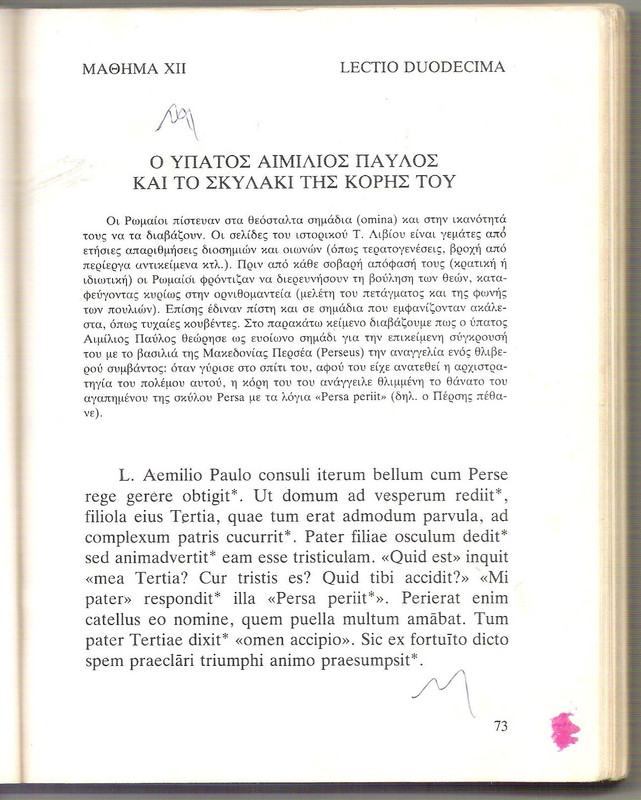
We can gather quite a lot about how the Melitan looked. This is all thanks to the large corpus of surviving depictions of it across vastly different artistic styles and media, including vase paintings, grave reliefs and terracotta figurines.
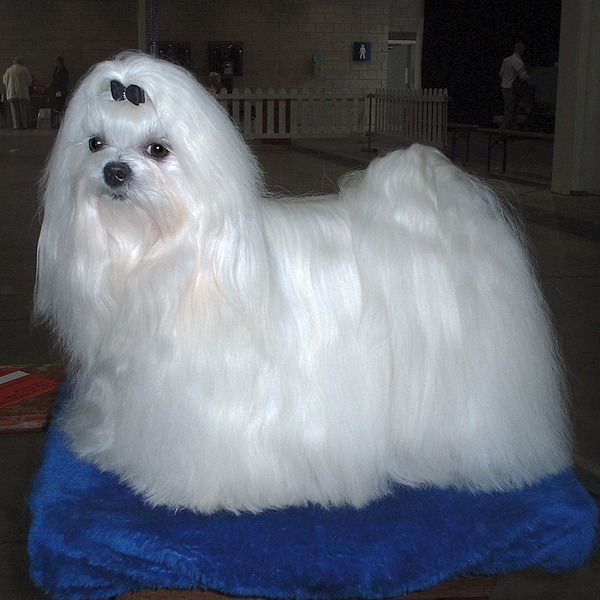
The Melitan was a small, fluffy, spitz-type dog, commonly white in colour. While there is a tendency today for many toy dog breeds to be brachycephalic, or to have shorter, squished-up noses, the Melitan was depicted with only moderate brachycephaly at most. It was a fairly proportional miniature dog with a very appealing, pointed, fox-like muzzle.
The earliest dated image of this dog comes from an amphora found in Vulci. This is also the only picture of a Melitan with what appears to be the name “Melitan” inscribed next to it:








 There are decades where you fuck around and days where you find out



 Τη θυμάμαι αυτή την ιστορία από το μάθημα λατινικών στο λύκειο.